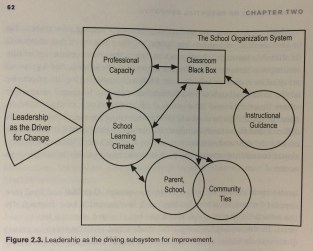
Reaction: Distributed Leadership & Systems of Practice

Aren’t these beautiful, mathematical systems?

Readings this week:

Halverson, R. (201?). Systems of Practice: How Leaders Use Artifacts to Create Professional Community in Schools.

Spillane, J., Halverson, R., Diamond, J. (2004). Towards a theory of leadership practice: a distributed perspective. Journal of Curriculum Studies. 36 (1): 3-34.

I’ve read so much in the past four months (more than I have in the past 10 years) that sometimes I lose track of what I wanted to come to graduate school to study in the first place. The readings this week took me right back to questions I wrote in my personal statement: “How can a system-wide professional growth model be designed that inspires a professional culture? Is cultivating passionate and engaged teachers enough to shift an institution? What other structures or leadership opportunities do teachers need to feel connected?”

The distributed perspective for leadership presented by Spillane et al. proposes that leadership is never limited to one person alone. It is distributed across actors, tools, and context. The relevant level of analysis for the practice of leadership is the tasks that leaders do. Changing the practice of leadership thus begins with changing the tasks and routinizing these new tasks, eventually rooting the changes into the norms or culture of the organization. What resonates most with me is the fact that distributed leadership is both a way to see leadership and a way to change it.  Continue reading “Reaction: Distributed Leadership & Systems of Practice”

Chapter 3, Organizing Schools for Improvement

A little delay since the last two posts (Intro & Chapter 1, Chapter 2)… Christmas vacation = no preschool, so life has been very full of other things. Also, took a little trip. Here’s my view as I write this morning:

/home/wpcom/public_html/wp-content/blogs.dir/db1/39059569/files/2015/01/img_0069.jpg
Life is good!

In Chapter 2, the authors introduced their five “essential supports”: 1) school leadership, 2) parent-school-community ties, 3) professional capacity, 4) student-centered learning climate, and 5) instructional guidance system. Note that these are supports, as in they provide conditions that “substantially influence” (p.79) the work of the school, but they do not directly cause the improvement. This is the nuance of a systems approach. The authors also make the point that they are essential and will use a quantitative methodology to show that improvement stagnates without them.

Because of this systems approach, the idea of “holding other factors constant” doesn’t make sense. If each support is reinforcing (or undermining) to the other, holding others constant doesn’t actually give a sense of how the two systems interact, sort of like trying to understand how a steering wheel functions independent of the wheels. This also means that statistical approaches that are designed to control for particular variables don’t work. Thus the approach that is used is “a form of analytic spiral” (p.80). Basically the authors use a large longitudinal database of surveys and test scores to explore these supports. I would be interested to know all the other ideas they tried before coming up with their final analysis. It comes across quite straightforward, but the process was no doubt complex.

Again, they use reading and math test scores, but they use them only as an indicator of improvement if they were in the top quartile or stagnation if they were in the bottom quartile. This approach makes sense to me as the top and bottoms are obviously showing improvement or stagnation whereas those in the middle are harder to parse. Perhaps as my quantitative fluency improves I will have a more critical eye to their methods, but for now I will take it as presented.

A strength of their analysis is that they present both the schools that are improving and stagnating. This bolsters their argument because it shows that schools with high levels of the supports are more likely than chance to show significant improvement whereas schools with low levels of the supports are more likely than chance to show stagnation.

Most interesting to me was the cumulative effects of the supports. Through an aggregated indicator score for the supports compared to improvement in math, reading, and attendance, the authors show a distinct correlation with strength or weakness in the supports.

/home/wpcom/public_html/wp-content/blogs.dir/db1/39059569/files/2015/01/img_0073.jpg
P. 94

Chapter 2 of Organizing Schools for Improvement

This is a follow up post to yesterday’s introduction & chapter 1. I’ve been enjoying this reading immensely because it quantitatively presents an understanding the support systems of a school and shows interactions between them. Many of the questions that I have had around emergent properties like how innovation affects school culture could be approached with these methods. The primary phenomena investigates is “how to better organize schools to support improvements in student engagement and learning” (p.48).

I find myself drawn to this more descriptive approach to research rather than as an interventionist. I think this is because the questions that I ask are on a large scale, so the idea of creating an intervention to “test” them would take years. It makes me think of the Hertzpring-Russell diagram, a plot of the absolute magnitude and temperature of stars, revealing the “main sequence” of stellar evolution. I wonder if I could make something like that for restructuring of schools… Hmmm.

Chapter 2: A Framework of Essential Supports

In this chapter the thrust is to explore the framework that emerged from the data. It’s worth noting that the criticism of business in the mid 80s was that large bureaucratic organizations were failing because they did not “respond well to local needs, had little capacity to learn, and stifled rather than nurtured innovation” (p.46). Sounds like the Chicago Public Schools, thus the Chicago School Reform Act. With more autonomy for restructuring at the school level, it makes sense to look at the school as the unit of research. This departs from some reform efforts at that time, which focused exclusively on instruction and the role of the principal as instructional leader.

The stated goal of the “theory of school organization and its improvement” (p.44) is to be grounded in practice. The tension between theory and practice is longstanding. (I have seen theory and practice best unified through design, so it will be interesting to see if there are similarities there. Also, it is hard for me to both approach this work as a practitioner and as a researcher, but if that is the goal it will be important to evaluate it from both perspectives.)

Second, the framework is meant to be analytic, in the sense that a practitioner could use it as a tool to guide school improvement. (This resonates with me after what I said above about creating a H-R-like diagram of school characteristics that creates a “main-sequence.”) The framework is based in organizational theory but also informed by contingency theory, given that this is an analytic tool meant to guide school improvement rather than a recipe for how to do the best school improvement.

They get at this with the “baking a cake” analogy to the concept of “essentiality.” You have to have certain ingredients (e.g. flour, sugar, eggs, baking powder, and salt) to make a cake, but the exact ratios are a little flexible. This is like school improvement: without one ingredient, the improvement isn’t going to happen. On the other hand, focusing exclusively on the exact right amount eggs also isn’t going to make it happen if you’ve got no flour. This is why it’s emergent. All ingredients need to be there.

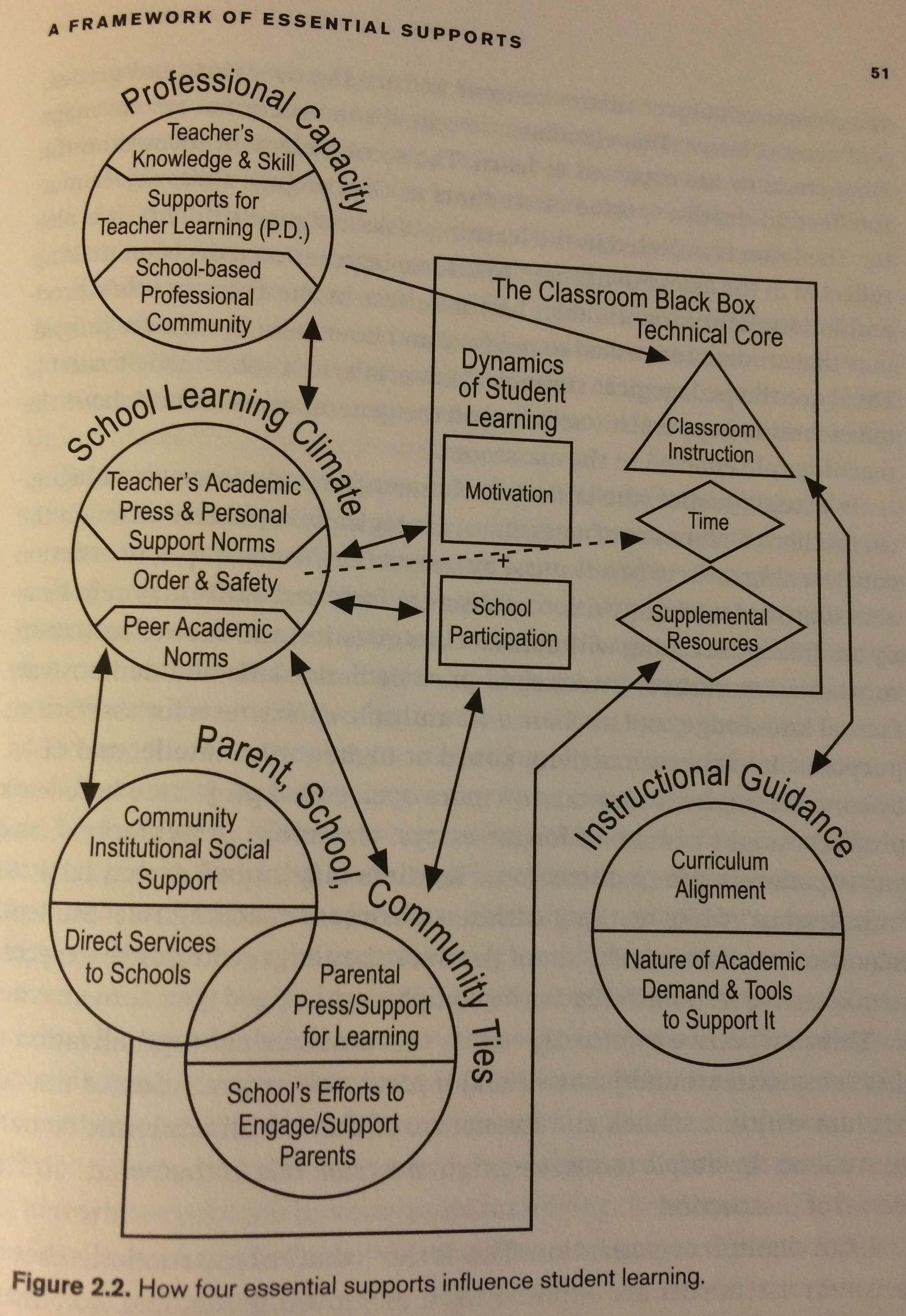
Figures 2.1-4 – these give the four levels of organization.

IMG_2837 IMG_2838 IMG_2839 IMG_2840

(I debated whether to post these because I don’t want to violate copyright, but seeing them next to each other is really helpful. In the book they are separated on different pages and this way you really get the zoom out of each level and a sense of just how complex the system is!)

An interesting component that they notice was missing from their data collection is the managerial dimension of school leadership. The researchers note that this became obvious after 1996 when the focus was on non-improving schools and found that there were schools where just the basic routines were not getting done. Management is a necessary but insufficient condition for improvement.

5 subsystems: School leadership, parent-community-school ties, professional capacity, student-centered learning climate, instructional guidance. There are 14 indicators for these subsystems developed to “capture the degree to which the essential supports developed in Chicago elementary schools” (p.71).

Up next, Chapter 3.

Introduction & Chapter 1, Organizing Schools for Improvement

Book cover. Retrieved Dec 16, 2014 from http://ccsr.uchicago.edu/sites/default/files/styles/galleryimage/public/publications/6942book_cover.png

One book I’m reading during the “recess” from classes is Organizing Schools for Improvement: Lessons from Chicago (2010), by Bryk, Sebring, Allensworth, Luppescu, and Easton. As I’ve done for other independent readings, I’ll try to summarize the chapters and add my own reflections at the end. I’ve found that writing these blog posts improves my comprehension and memory of the research. It’s like all that research on learning actually works!

Introduction

Policy context: The research presented in this book is based on the reform initiatives in the Chicago Public School (CPS) District beginning with the Chicago School Reform Act of 1988. Essentially, Local School Councils (LSCs) were given the authority to determine how to education their children, including hiring the school principal. Eight years later, some schools had shown marked improvements while others languished; this research effort tried to understand why. Continue reading “Introduction & Chapter 1, Organizing Schools for Improvement”

Reaction 12: DIY, MOOCs, and Higher Ed

Reading this week:

Carey, K. (2012). The Siege of Academe. Washington Monthly, 34–44.

Kamenetz, A. (2010). Edupunks, Edupreneurs, and the Coming Transformation of Higher Education. White River Junction, Vermont: Chelsea Green Publishing.

Schechtman, N., DeBarger, A. H., Dornsift, C., Rosier, S., & Yarnall, L. (2013). Promoting Grit, Tenacity, and Perseverance: Critical Factors for Success in the 21st Century (pp. 1–126).

If there is one thing harder than revolutionizing higher education, it might be capitalistic treatment of the environment. In September, there was a report released by the Global Commission on the Economy and Climate that aimed to show how governments and businesses could “improve economic growth and reduce their carbon emissions together.” (Economic Growth and Action) Instead of companies sacrificing profit for the publicity of being environmentally friendly, now there is an economic logic to reducing costs through mass transit, restoring land, renewable energy, etc. What I appreciated about at least the idea of this report was designing systems and logic to match the goals of seemingly antagonistic forces. Capitalism doesn’t have to be anti-environment if it is in the businesses best interest to maintain a healthy environment. As we improve understandings and data of ecosystems, manufacturers or refineries understand the way they negatively or positively impact the environment, which in turn hurts their profits.

How can we design systems in education where key players in institutions (in this case, educators) see that it is in their best interest to exploit the possibilities of technology? Unfortunately most of the rhetoric used is from a capitalist perspective of efficiencies and consumption, which educators, in general, are philosophically opposed to. In Peurach and Gumus (2011), in an article reviewing leadership in School Improvement Networks such as charters, I was struck by the quote, “Critics express concern that this new school improvement market will be more responsive to principles of competition and consumerism than to principles of student welfare and the public good, with student achievement potentially taking a back seat to increasing the scale of operations or (in the case of for-profit providers) showing positive returns on investment.” (p. 3) How do we design as system that is responsive to the principles of competition and consumerism but prioritizes student welfare and public good? Focusing on efficiencies and costs doesn’t get at the stubborn, “heavily regulated, culturally entrenched,” (Carey, 2012) nature of higher education.

Could data bridge the ideological gap between the Silicon Valley edupreneurial venture capitalists and traditional higher education? I think about the Houston KIPP school that is changing their policies because of they acknowledged the high teacher turnover rate and the corresponding negative affect on student learning and cost. They are now offering onsite daycare and lactation rooms, flexible schedules or shorter hours, and even staff priority in admission lotteries. (Monahan, 2014) Is it naively optimistic to think that unbundling the traditional structures of education would introduce enlightened policies like this? Or is this a capitalistic mirage? “Digital philosophers have become fascinated by the potential of a humanized use of technology to liberate people from all kinds of bureaucratic institutions that have defined modern life for more than a century.” (Kamenetz, p. 114) Will this liberation be a net improvement for all or for some?

I feel like Richard Sennett is looking over my shoulder, shaking his head, warning of those who will lose out in this fresh-page version of education. What happens to those who are not able to access this free and abundant knowledge available through the internet? What happens to those who are not driven to do-it-themelves? What happens to those who are lost in the shuffle? As Wood (2014) states about the Minerva project, “If Minerva fails, it will lay off its staff and sell its office furniture and never be heard from again.” Is this the kind of ad-hoc fail-fast try-anything culture we want for the education of our children?

But then, society today really is different. As Carey points out, “When colleges were originally built, there were only two ways to get scholarly information: read a book or talk to a smart person.” (p. 40) Connections and personal learning networks are a reality that will continue to unbundle education. If the music industry is any indication, it is the open source, networked, decentralized models that will persevere and traditional educational organizations ignore it at their peril. It is more than a little ironic that institutions for teaching and learning are not themselves flexible and adaptive to learn as organizations.

At the beginning of this class, the question was posed, “Are learning technologies the solution or the problem?” After this week’s reading, I feel like they are the reality, dominated by the rhetoric of the fresh-page sector (i.e. Silicon Valley edupreneurs). Perhaps the innovation we need is a sociotechnical system design that unifies the seemingly antagonistic domains of capitalism and education towards a common utopia. Just that 🙂

Additional Citations:

Monahan, R. (2014). Charter Schools Try to Retain Teachers with Mom-Friendly Policies. The Atlantic. November 11, 2014. Retrieved November 28, 2014. http://www.theatlantic.com/education/archive/2014/11/charter-schools-now-try-to-keep-teachers-with-mom-friendly-policies/382602/

Peurach, D. J., & Gumus, E. (2011). Executive Leadership in School Improvement Networks : A Conceptual Framework and Agenda for Research. Current Issues in Education, 14(3), 1–17.

RELEASE: Economic Growth and Action on Climate Change Can Now Be Achieved Together, Finds Global Commission. (2014). Retrieved November 28, 2014, from http://www.wri.org/news/2014/09/release-economic-growth-and-action-climate-change-can-now-be-achieved-together-finds

Sennett, R. (2006). The Culture of the New Capitalism. New Haven: Yale University Press.

Wood, G. (2014). The Future of College. The Atlantic. September 2014. Accessed November 28th, 2014. http://www.theatlantic.com/features/archive/2014/08/the-future-of-college/375071/

Continue reading “Reaction 12: DIY, MOOCs, and Higher Ed”

Reaction 11: Data-Driven Instructional Systems

Anarchist Org Chart: https://juliekallio.com/wp-content/uploads/2014/11/a8423-anarchistorgchart.gif

Reading this week:

Halverson, R.; Grigg, J.; Prichett, R.; Thomas, C. (2007). The New Instructional Leadership: Creating Data-Driven Instructional Systems in School. Journal of School Leadership. 17: 159-193.

Thorn, C.A. (2001, November 19). Knowledge Management for Educational Information Systems: What Is the State of the Field?. Education Policy Analysis Archives. 9(47). Retrieved September 5, 2007 from http://epaa.asu.edu/epaa/v9n47/.

Unit of analysis. That seemed to be the thing that kept popping out at me this week. This was stated directly by Thorn (2001) that if the student is the unit of interest, then the data gathered should be attributes about the student. Student Information Systems, however, tend to be designed to produce reports for district-level analysis, not for the classroom. Halverson et al. (2007) found a mismatch or inoperability of data in the district’s high-tech data storage as opposed to the local collection and storage of low-tech data. The logical goal of the proposed data-driven instructional system is thus to link the results of summative data with formative information systems that teachers can use to improve instruction. The goal of practical measurement, as proposed by Yeager et al. (2013) is that “educators need data closely linked to specific work processes and change ideas being introduced in a particular context” (p.12).

In the past, I have associated data-driven decision making as context-blind work whose sole purpose was to improve standardized test scores. The readings this week as well as the networked improvement communities (Bryk et al., 2010) from a few weeks ago has given me a different perspective on what it means to use data to inform instruction, design, and communities. Continue reading “Reaction 11: Data-Driven Instructional Systems”

Embeddedness: Implications for Leaders & Researchers

Prompt:

Post a paragraph or two addressing embeddedness in your settings. Specifically, how, where, and to what extent are leaders embedded throughout your school/organizational community? Are there certain areas where embedded insights are needed, but missing?  What are the regular routines and practices that operationalize/sustain this embeddedness?

Second, please project how you’ll embed yourself within your school community when you are a leader? Where will you spend time? What types of routines will you utilize to ensure that you are sufficiently “close” to all stakeholders? 

Ignatius, David. (2010). The Dangers of Embedded Journalism, in War and Politics. The Washington Post. May 2, 2010. http://www.washingtonpost.com/wp-dyn/content/article/2010/04/30/AR2010043001100.html

Act 1: Weeds of Discontent, from The View From In Here. This American Life. July 26, 2013. http://www.thisamericanlife.org/radio-archives/episode/501/the-view-from-in-here

I could speak to embeddedness in the school that I previously taught at, but I think I’ll attempt this from the standpoint of being a researcher. The arguments about embedded journalists and the price of intimately knowing one side but not the other, reminded me of the questions about rigor in qualitative work. Qualitative reports can become so contextualized that you miss the perspectives of other stakeholders, such as students, parents, community, boards, etc. You have to limit the scope of a case study somehow, but you should identify the ecology of the system and make conscious decisions about how it is limited.

For most of the research that I’ve read this fall, very little student voice is present, perhaps ironically given that their performance is usually the outcome being measured. The This American Life interview that gives the perspective of the inmate reminded me how little we asked students their side. Interventions are done to them and their outcomes are measured, without the consideration that they are an independent actor. Some of the most powerful pieces I can remember reading (School Girls, by Peggy Orenstein; Doing School, by Denise Pope Clark; and more recently the veteran teacher turned learning coach who blogged about shadowing students, posted on Grant Wiggins’ blog) were researchers who embedded with students, understanding their perspective in a way that would not have been clear through interviews or surveys.

Here are three thoughts on the challenges of embeddedness in research and school leadership: First, it can be challenging for one person to have strong relationships with all stakeholders. Some people are naturally more comfortable interacting with students or parents or teachers or board members. Thus a research team and advisor can help identify scope and perspective. Second, both researchers and school leaders could routinize being closer to all stakeholders by establishing (and keeping) a regular time to meet or be in the same space or the other’s space. We often think we understand someone’s perspective by their reports, but physically being there is important and draws out observations and questions that wouldn’t have come through otherwise. Finally, I do not think researchers or school leaders should be non-ideological reporters. While they need to maintain an openness and respect for differences of opinion, I think a leader needs to ideological stand (such as the importance of technology integration or cross-curricular coordination) on issues in order to lead towards an organizational vision.

Reaction 10: Questions of behaviorism and identity in ed-tech

Reading this week:

Bailey, J., Carter, S. C., Schneider, C., & Vander Ark, T. (2012). Data Backpacks: Digital learning now!.

U.S. Department of Education. (2012). Enhancing Teaching and Learning Through Educational Data Mining and Learning Analytics: An Issue Brief.

Hill, P. T. (n.d.). Finance in the Digital-Learning Era. Creating Sound Policy for Digital Learning: A Working Paper Series from the Thomas B. Fordham Institute.

What problems are we trying to solve?

  • “The current way student records and transcripts are managed is insufficient to meet the evolving needs of teachers, students, and parents” (Bailey et al.).
  • “Our system doesn’t fund schools, and certainly doesn’t fund students” (Hill).
  • Policymakers and administrators need to understand “how analytics and data mining have been—and can be—applied for educational improvement” (Data Mining and Learning Analytics).

What vision of education are we working towards?

  • “Each student’s account would, in a sense, constitute a ‘backpack’ of funding that the student would carry with her to any eligible school or instructional programs in which she enrolls. The contents of the backpack would be flexible dollars, not coupons whose use is restricted to a particular course or service” (Hill).
  • “The most important [adantage] is individualization and rapid adaptation to what a student is learning, leading to the possibility of more rapid and consistent student growth” (Bailey et al.).
  • “Making visible students’ learning and assessment activities opens up the possibility for students to develop skills in monitoring their own learning and to see directly how their effort improves their success” (Data Mining and Learning Analytics).
  • “A study contrasting the performance of students randomly assigned to the OLI statistics course with those in conventional classroom instruction found that the former achieved better learning outcomes in half the time (Lovett, Meyer, and Thille 2008)” (Data Mining and Learning Analytics).

What limitations might there be or what questions should we ask?

  • Who are the designers of the platforms and how are their biases in them? This is not a new question for educational materials, but still one worth considering.
  • “What children learn would then depend on the quality of their parents’ choices” (Hill). How would kids fare whose parents were not able, for various reasons, to keep up with choices?
  • Programs could be prevented from use “only after some children had been demonstrably hurt by them” (Hill).
  • “All such investments are meant to benefit children but they also benefit private parties—the teachers who use new skills to make higher salaries, the vendors who sell professional devel-opment services, etc.” (Bailey et al.).
  • “Unlike educational data mining, learning analytics generally does not emphasize reducing learning into components but instead seeks to understand entire systems and to support human decision making” (Data Mining and Learning Analytics).

How might the changes in personalization, finance, and data foster a participatory culture of learning?

I recently watched and blogged about Audrey Watters’ keynote from the C-Alt conference, titled Ed-Tech, Frankenstein’s Monsters, and Teacher Machines. She talked about how ed-tech is full of behaviorist technologies, citing notifications, nudges, gamification, which is built in to many of the platforms written about in this week’s readings. She tells the story of Alan Turing asking if a computer could think, but that he really meant asking whether a computer could exhibit behaviors that could fool a human into thinking it was human “enough.” I see learning more from a constructivist point of view, where students build their knowledge on what they already know, as we read about in “How People Learn.” Are behaviorism and constructivism at odds in a learning ecosystem or could they coexist for building different skills? I see a participatory culture as being fundamentally constructivist, where learners’ own interests and experiences drive affiliations and personal expressions. Does a system based on behavioralism preclude authentic participation?

The idea of authenticity also brought me to questions of identity. This infographic compares “team transparency,” led by Mark Zuckerberg, and “team anonymity,” led by Christopher “Moot” Poole, founder of 4chan. How does having your identity (or a notion of a fixed identity) as a learner tracked from birth affect a person’s own identity formation? How does the platform reward or require a certain identity? (Kimmons, 2014) In working with middle schoolers, I saw the importance of kids trying on different identities as a way to understand their world. A learner profile that follows them year to year and school to school may smooth learning opportunties but it may also lock kids into always being “that kid.” Furthermore, if we have take a post-modern understanding of identity as one that is never fixed but is created in relation to others and situations, what impact (good or bad) will this big data mediated, educational enviroment mean? How will the designers be training certain identities? How will this impact divergent thinking? Will these redesigns mean more creative thinkers? These are geniune questions, not meant to be particularly optimistic or pessimistic, though I think people will see them in one way or the other based on their own inclinations.

Kimmons, R. (2014). Social Networking Sites, Literacy, and the Authentic Identity Problem. TechTrends, 58(2), 93–98.

Reaction 9: Professional Learning in a Digital World

Pinterest/Education

Reading this week:

  • Education at Pinterest: http://www.pinterest.com/all/education/
  • EdCamp.org
  • Bryk, A. S., Gomez, L. M. & Grunow, A. (2011) Getting Ideas into Action: Building Networked Improvement Communities in Education. In M. Hallinan (ed.) Frontiers in Sociology of Education. Springer Publishing.
  • Morris, A. K. & Hiebert, J. (2011) Creating Shared Instructional Products : An Alternative Approach to Improving Teaching. Educational Researcher 40 (5). 5-14.

I have to be honest: I’m not really sure what Morris and Hiebert were actually writing about. They used the word “products” 89 times, without ever giving an example. These “instructional products” are supposed to guide teaching, help students “achieve specified learning goals,” and improve “performance.” Performance of what? Learning goals decided by whom? They do give a nod to context, saying that “it makes sense to study standardized instructional treatments across variable settings, examining the data to learn about the effects of the contextual variables in the settings.” Continue reading “Reaction 9: Professional Learning in a Digital World”

Networked Scholars Course: Week 3 Reflection

Notes from Networked Scholars course this week. My thoughts at the end…

Zeynep Tufekci‘s article, Social Media is a Conversation, Not a Press Release: How @nytkeller and @emmagkeller flunk understanding @adamslisa:

  • How should it have been written? In one word: When trying to understand social media presence, dear journalists, don’t “peruse.” Engage. Because that’s how the medium works.
  • To understand these basic points Lisa Adams made, repeatedly, over the years, you’d have to be engaging her feed, and not just reading snippets of it and projecting it onto one’s own anxieties or issues.
  • If anything, social media has helped move us to a world in which people are no longer passive, silent subjects of journalists (or academics or other gatekeepers of public discourse). We can no longer speak of people at them, without them talking back of their own experience, and articulating their own narrative in their own terms. And how to deal with that reality, not whether cancer patients should tweet that much, is the real ethical question before us.

Sherry Turkle‘s TED talk about Alone Together:

  • We want to be in spaces together, but we only want to pay attention to the bits that interest us. I definitely see this is graduate school classes. In texting, we get to edit, delete, and retouch our voice, but real relationships are awkward and messy. A little later, “I share there for I am.” The more we connect the more isolated we are because we do not cultivate solitude. We need to teach our children to be alone.

“People who make the most of their lives on the screen, come to it in a spirit of self-reflection.”

  • Develop a self-aware relationship with our devices and others: make room for solitude.

Audrey Watters‘ keynote for C-Alt conference, Ed-Tech, Frankenstein’s Monsters, and Teacher Machines: Continue reading “Networked Scholars Course: Week 3 Reflection”